Invoice sent is not invoice paid
Most B2B invoicing tools stop at 'sent'. The work that matters happens between the email and the settlement report — here is how PlackPay closes that gap.
AppNet Solutions · 14 July 2026 · 6 min read
Every invoicing tool can produce a PDF. The interesting question is what happens after the PDF leaves: who opened it, whether they can pay it without leaving the email, and when the money actually arrives in an account someone can reconcile.
Where B2B invoices go to wait
A typical cross-border invoice is sent as an attachment, printed, approved, re-keyed into a bank portal and paid two to six weeks later — by a transfer whose reference rarely matches the invoice number. Finance then spends the close matching what arrived to what was owed.
None of that is a payment problem. It is a visibility problem: the issuer cannot see the invoice’s state after “sent”, so they cannot act on it.
Put the checkout in the invoice
The design decision that shaped PlackPay was to make the invoice itself the payment surface. Every branded invoice carries an embedded, PCI DSS-compliant checkout — Visa, Mastercard and American Express — so the person who approves it can pay it in the same minute, without a bank portal and without a reference field to mistype.
Because the payment originates from the invoice, it is attributed to the invoice. There is nothing to match afterwards.
Track state, not documents
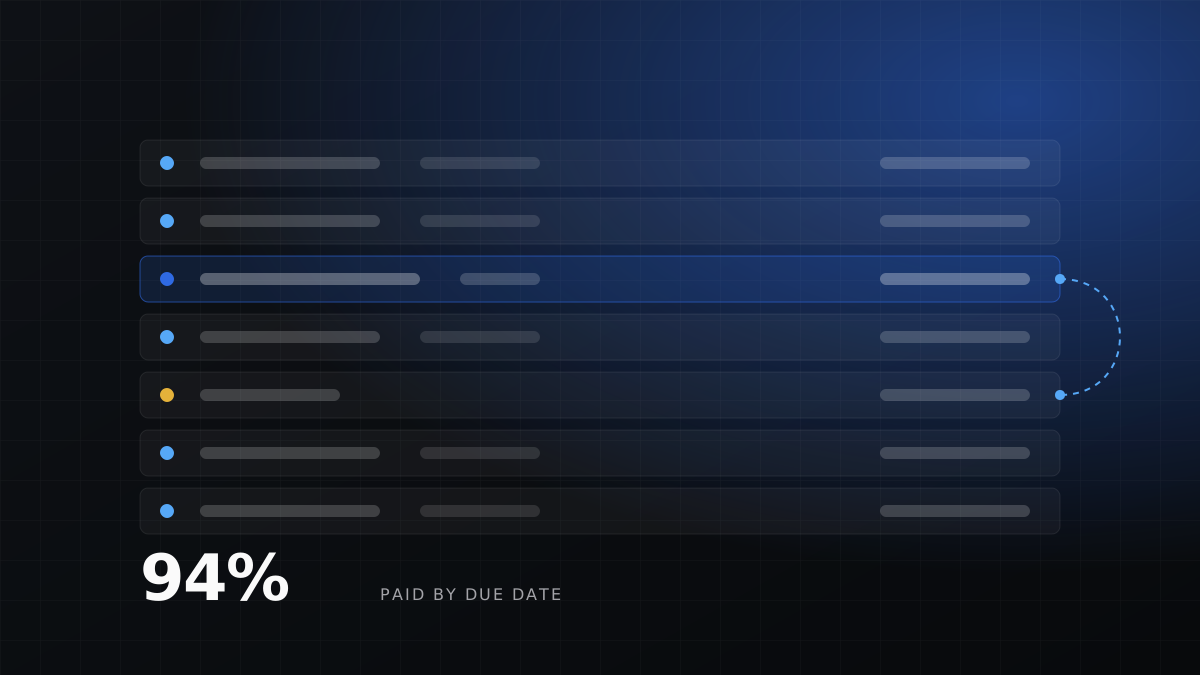
An invoice in PlackPay is not a file; it is a record with a state: created, sent, viewed, paid, settled. The activity dashboard shows every invoice at every stage, so the question “what is outstanding?” is a filter, not a spreadsheet.
Settlement is the stage most tools forget. “Paid” means the customer’s card was charged; “settled” means the funds are in your account and reportable. PlackPay reports both, and the settlement reports are built to be exported straight into whatever the accountants use.
Global means multi-currency, not multi-tool
Businesses selling into several markets usually end up with one invoicing setup per currency. PlackPay issues in the customer’s currency with international compliance handled in the platform, so a business in Nairobi can invoice a client in Frankfurt and a client in Lagos from one dashboard.
Twelve hours, not twelve days
Onboarding is where most global payment platforms lose a small business: weeks of back-and-forth over documents. PlackPay takes KYC documents at registration and reviews within 12 hours. The first invoice can go out the same day.
The measure that matters
Not invoices sent. Days from issuance to settlement, and how many invoices needed a human to chase. If both are falling, the invoicing is working.